Emiliana winery, Chile: organic and biodynamic wine tours in the Casablanca Valley
Visiting Emiliana Organic Vineyards in Chile's Casablanca Valley: the Organic and Gê tasting tours with 2026 prices, times, what you see on the vineyard walk and how to get there.
Emiliana is the Casablanca Valley winery to visit if you want to see how organic and biodynamic wine is farmed, not only taste it. Its visitor site is on the north side of Ruta 68 at km 60.7, about an hour from Santiago and up to an hour and a half in traffic. The winery runs two guided tours, Tuesday to Saturday at 10:30 a.m., 12:30 p.m. and 2:30 p.m.: the Organic Tasting Tour, 1 hour 15 minutes with four wines for CLP 42,990 per person, and the Gê Organic Tasting Tour, 1 hour 20 minutes with five wines ending on Gê for CLP 47,990. Book the Organic Tasting Tour for a first visit.
Without a car, the easiest way in is a shared wine day. The Four Casablanca Wineries tour includes admission at Emiliana, Bodegas RE and Casa del Molle, then a lunch stop at Tanino at your own expense, over 10 hours from $139 per person with 4.8 from 671 Viator reviews (October 2026). Our Emiliana winery tours page compares every tour that stops there.
Check Availability
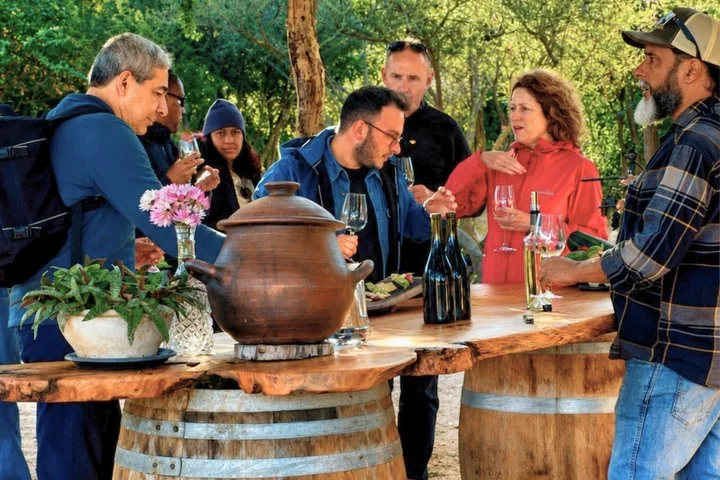
Four Casablanca Wineries: Emiliana, Bodegas RE, Casa del Molle, Tanino
- 4.8/5 (671 reviews)
- 10 hours
- Free cancellation
- Operated by Go2Chile Travel
Includes Admission at Emiliana Organic Vineyards · Admission at Bodegas RE · Admission at Casa del Molle
You'll choose your date and complete the booking on Viator. Free cancellation up to 24 hours before departure.
Emiliana Winery at a glance
| Essential information | Details |
|---|---|
| Winery | Viña Emiliana, sold as Emiliana Organic Vineyards |
| Location | North side of Ruta 68, km 60.7, Casablanca Valley, Chile |
| History | Dates to 1986; began converting to organic farming in 1998 |
| Best known for | Organic and biodynamic wine |
| Main tours | Organic Tasting Tour and Gê Organic Tasting Tour |
| Organic Tasting Tour | 1 hour 15 minutes, four wines (two white, two red), CLP 42,990 per person |
| Gê Organic Tasting Tour | 1 hour 20 minutes, five wines ending with Gê, CLP 47,990 per person |
| Tour times | Tuesday to Saturday, 10:30 a.m., 12:30 p.m. and 2:30 p.m. |
| Wine shop | 9 a.m. to 5 p.m.; Monday to Saturday from December to March, Tuesday to Saturday from April to November |
| Languages | English or Spanish, chosen when you book |
| Best for | Wine lovers, eco-minded travelers, beginners and anyone curious about farming |
| Booking | Online through the winery’s shop, ahead of your visit |
| From Santiago | About an hour by road, up to 1.5 hours with traffic |
Times and prices come from Emiliana’s tours page and online shop, checked in October 2026. Confirm availability for your date.
Is Emiliana Winery worth visiting?
Yes, especially if you want to understand where wine comes from. Emiliana built its name on organic farming, biodiversity and biodynamic agriculture, and it started converting its vineyards in 1998, long before organic wine was common on supermarket shelves.
The visit explains those practices in plain terms. You do not need to know anything about biodynamics or soil biology; the guide introduces the ideas as you walk the property and points out what each part of the vineyard does. Of the Casablanca wineries, it is the clearest place to see the link between farming and wine.
Reasons to visit
- A vineyard walk with something to see. The tour spends its time on soils, plants, animals and growing conditions, not only barrels and tanks.
- An easy introduction to organic wine. The guides explain the farming without assuming specialist knowledge.
- A wide range of Chilean wines. Emiliana makes everything from everyday Sauvignon Blanc to premium blends such as Coyam and Gê.
- An easy stop on Ruta 68. The winery sits beside the main road, so it fits a day trip from Santiago or the coast.
- A contrast with other wineries. Pair Emiliana with Casas del Bosque or Bodegas RE and you see two very different approaches to wine.
Reasons to choose somewhere else
Emiliana is not the place for a long restaurant lunch. The standard tour is fairly short, and the draw is the farming and the tasting, not a big hospitality complex.
If vineyard restaurants are your priority, Casas del Bosque suits you better. For experimental wines and unusual cellar techniques, try Bodegas RE. For a winery visit about the environment and farming, Emiliana is hard to beat.
Other Experiences
Other experiences you might enjoy
More Casablanca Valley wine tours, each with its own page and booking link.

What makes Emiliana different from other Chilean wineries?
The short answer: Emiliana treats soil, plants, animals and vines as parts of one farming system. The longer answer starts in 1998.
From conventional vineyards to organic agriculture
Emiliana dates to 1986, but its defining change began in 1998. Rafael and José Guilisasti, working with winemaker Álvaro Espinoza, began converting conventional vineyards to organic and biodynamic farming.
At the time, conventional vineyards relied on synthetic pesticides, herbicides and fertilizers, so the project was a big change. It also took years: organic certification requires a conversion period while the vineyard adapts.
Coyam 2001 was the project’s first vintage, and Coyam and Novas reached the market in 2003 as Emiliana’s first organic wines. In 2006 the 2003 vintage of Gê became the first wine in Chile and Latin America certified biodynamic by Demeter.
Since then the winery has expanded organic farming across several Chilean wine regions, and much of its production comes from outside Casablanca, especially the Los Robles estate in the Colchagua Valley.
That matters on the day: not every Emiliana wine you taste is made from Casablanca Valley grapes. The Casablanca estate is a working vineyard and a place to see the company’s wider approach to wine.
Organic vs biodynamic wine: what’s the difference?
The two terms often appear together, but they do not mean the same thing.
Organic wine
Organic viticulture follows regulated standards on what can be applied in the vineyard and how. In general, organic vineyards avoid synthetic herbicides and fertilizers and use approved methods to manage pests and soil.
Organic does not mean nothing is sprayed. Certified organic growers can use approved treatments, including some copper- and sulfur-based products. Organic winemaking also has its own production and labeling rules.
Biodynamic wine
Biodynamic farming builds on organic principles but treats the farm as a self-sustaining whole. It stresses biodiversity, soil fertility, compost, livestock on the farm and fewer outside inputs. It also uses specific biodynamic preparations and, on many farms, a planting calendar based on lunar and other celestial cycles.
The modern biodynamic movement grew out of lectures on agriculture by Rudolf Steiner in the 1920s. Demeter is the best-known international certifier. Demeter-certified farms must meet organic rules as well as extra biodynamic standards, with regular inspections.
Organic vs biodynamic: quick comparison
| Feature | Organic viticulture | Biodynamic viticulture |
|---|---|---|
| Regulated farming standards | Yes | Yes, for certified biodynamic production |
| Limits on synthetic pesticides and fertilizers | Yes | Yes |
| Compost and soil management | Encouraged and widely used | Central to the system |
| Biodiversity | Important | Strongly emphasized |
| Livestock on the farm | Possible | Often a core principle |
| Biodynamic preparations | Not required | Required under Demeter standards |
| Planting calendars | Not required | Associated with biodynamic practice |
| Certification | Organic certification bodies | Demeter and related certifiers |
Does biodynamic wine taste better?
Not necessarily. Good vineyard management can improve growing conditions, but there is no reliable basis for saying biodynamic wine always tastes better than conventional wine. Quality also depends on the grape, climate, soil, vintage, yields, fermentation and the winemaker’s choices.
Some biodynamic practices, such as composting and encouraging biodiversity, overlap with well-established sustainable farming. Others, especially claims about cosmic or lunar influence, lack convincing scientific evidence. At Emiliana you can see many of the methods in action and judge the wines for yourself.
What happens on an Emiliana organic wine tour?
The standard visit is the Organic Tasting Tour: about 1 hour 15 minutes, with a walk through the vineyard and a guided tasting of four wines. The focus is the environment the grapes grow in.
1. Explore the vineyards
The tour starts with the valley’s landscape and climate. You learn why being close to the Pacific suits Sauvignon Blanc and Pinot Noir: the cool coastal air moderates temperatures, so grapes ripen and keep their freshness and acidity. The guide also explains the soils and the varieties planted on the property.
2. Meet the animals
Animals are part of how Emiliana farms, and you may see chickens and alpacas around the estate. Animals can help in the vineyard through grazing and manure, although what each species does depends on the vineyard.
The chickens and alpacas also make the visit memorable for people who are not especially interested in farming techniques, and they set it apart from the polished tasting rooms at some larger wineries.
3. Visit the organic garden
The route passes Emiliana’s organic garden, where plants, herbs and soil practices illustrate the farming approach. Growing herbs next to vines does not by itself make better wine; the aim is a more diverse farm that depends less on outside inputs.
4. Learn about composting and biodynamic preparations
You see how Emiliana makes compost and the preparations used in biodynamic farming. For many visitors this is the most educational part of the tour. Even if you are skeptical of parts of biodynamics, it is an interesting look at how a large wine company has built alternative farming into commercial production.
5. Taste four wines
The visit ends with a tasting of four Emiliana wines, two white and two red. The labels can change. The tasting lets you compare grapes and styles and connect what you saw outside with what is in the glass.
My verdict: for a first visit, this is the best introduction to Emiliana. The vineyard walk adds much more than a tasting alone.
Emiliana wine tours and tasting prices in 2026
Emiliana sells its two guided tours on its own online shop, priced per person. Turisviña, a Casablanca wine-tourism agency, lists three more experiences with indicative prices.
| Experience | Price (CLP) | Length | Where the price is listed |
|---|---|---|---|
| Organic Tasting Tour | 42,990 per person | 1 hour 15 minutes | Emiliana’s online shop |
| Gê Organic Tasting Tour | 47,990 per person | 1 hour 20 minutes | Emiliana’s online shop |
| Make Your Own Wine | 55,990 | Confirm when booking | Turisviña |
| Juice Tasting Tour | 34,990 | Confirm when booking | Turisviña |
| Organic Picnic | 50,000 | Confirm when booking | Turisviña |
Prices were checked in October 2026. For the three Turisviña experiences, confirm with the winery whether the price is per person or per booking, what is included and whether it runs on your date.
Organic Tasting Tour: for first-time visitors
This is the tour I would book for most people. It covers organic and biodynamic farming, the vineyard ecosystem and a tasting of two white and two red wines.
Choose this if:
- You have never visited an organic winery.
- You want a balanced introduction to sustainable winemaking.
- You are traveling with someone who enjoys nature as much as wine.
- You are visiting several wineries in one day.
Gê Organic Tasting Tour: for premium wine lovers
The Gê tour follows a similar route but ends with a premium tasting: four premium wines, then Gê, Emiliana’s flagship biodynamic blend. The winery says you can pair the wines with cheese or organic chocolates; ask whether that is included or extra. Our guide to wine and cheese pairing in the valley covers the other places that serve cheese with their wines.
Choose this if:
- You enjoy premium red wines.
- You are interested in biodynamic certification and how the wine is made.
- You want to taste Emiliana’s flagship wine.
- You prefer fewer winery stops with more time on the wines.
My pick: the Gê tour costs CLP 5,000 more than the standard tour and adds a fifth wine, so it is a good upgrade for wine enthusiasts. Beginners will be happy with the Organic Tasting Tour.
Other Emiliana experiences
Make Your Own Wine
This hands-on session is about blending. You taste three red grape varieties, learn what each brings to a wine, then make your own blend and label. It suits repeat winery visitors who want something more interactive than a tasting.
Confirm the minimum group size, language, length and whether you can take the finished wine home.
Juice Tasting Tour
Emiliana also runs a non-alcoholic tasting aimed at families: four grape juices with cheese and chocolate pairings, plus drawing materials for children. It is useful for families and groups with non-drinkers; check availability and age rules with the winery.
Organic Picnic
The picnic gives you a basket of food, drinks and wine to enjoy outdoors on the estate. It is a good choice in the valley’s warmer, drier months, but it does not replace the guided walk if you came to learn about organic farming.
Ask about dietary options, what happens if the weather turns, and whether the price covers one person or a shared basket.
Which Emiliana wines should you try?
Emiliana’s range covers several price levels and Chilean regions. In a tasting, look at how the wines differ instead of heading straight for the most expensive bottle.
Adobe: an easy introduction
Adobe is one of Emiliana’s most widely sold ranges: organic wines at everyday prices. Depending on the variety you may find a fresh Sauvignon Blanc, a fruity Pinot Noir, a Cabernet Sauvignon and other familiar styles. It shows that organic wine does not have to be a luxury, and it is a good starting point if you usually buy wine at the supermarket.
Novas: for exploring terroir
Novas sits above the everyday range and aims to show grape character and the region the fruit comes from. Taste it if you want to go beyond simple fruity wines without paying for the top labels, and look at the grape and region on the bottle.
Salvaje: for adventurous drinkers
Salvaje is Emiliana’s low-intervention line, made with a lighter hand in the cellar. It can taste and feel quite different from a conventional crisp, filtered wine. Check the current label for the grape and winemaking notes, because they can change by vintage.
Coyam: a serious Chilean red
Coyam is one of Emiliana’s signature wines and part of its organic history: the 2001 vintage was the project’s first, and the wine went on to become one of the company’s best-known premium labels. It is a red blend from the Los Robles estate in the Colchagua Valley, and depending on the vintage it can include Syrah, Carménère, Cabernet Sauvignon and other red grapes.
Expect a fuller wine with dark fruit, spice and more structure than a typical Casablanca Pinot Noir.
Food pairing: grilled beef, roast mushrooms, aged cheese and richly flavored dishes.
Gê: Emiliana’s flagship wine
Gê is Emiliana’s flagship biodynamic wine. Its 2003 vintage became the first Demeter-certified biodynamic wine from Chile and Latin America. It is a premium red blend from Colchagua, not a Casablanca white, and it is the reason to choose the Gê Organic Tasting Tour.
Food pairing: rich meat dishes, slow-cooked lamb, mushrooms and aged cheese.
57 Rocas: wines from other Chilean regions
The 57 Rocas range takes you beyond Casablanca: a Carménère from the Los Robles estate in Colchagua and a Cabernet Sauvignon from the Alto Maipo. They are useful if you want to compare grapes and growing regions across Chile.
Are Emiliana wines vegan?
According to the winery’s history, The Vegan Society certified its organic and biodynamic wines in 2019.
That matters because wine is not automatically vegan. Traditional winemaking sometimes clarifies wine with animal-derived fining agents such as egg white, casein or gelatin; vegan wine avoids them.
Organic and vegan are separate labels: a wine can be organic without being vegan, or vegan without being organic. If vegan certification matters to you, check the label of the bottle you buy instead of assuming every wine and vintage carries it.
What does sustainability mean at Emiliana?
Sustainability claims can be vague in the wine industry. At Emiliana you can point to specific practices and certifications.
Organic farming
The winery farms its vineyards organically, limiting synthetic inputs under certification rules.
Biodiversity
Animals, cover crops, gardens and other plants are part of how the vineyard is managed.
Composting and soil health
Emiliana makes compost to keep the soil fertile and to recycle organic material from the estate.
Biodynamic certification
The flagship wines have a documented history of Demeter biodynamic certification. If a specific certification matters to you, check whether it applies to the bottle, the vineyard or the company as a whole.
Social and environmental standards
The winery’s history lists ISO 14001 environmental management certification in 2001, the first for a Chilean winery, Fair for Life recognition in 2007 and Fair Trade certification in 2011. These are different standards with different audits. They measure different things, and none proves that every part of a company’s operation has no environmental impact.
What I find most convincing: at Emiliana you can see the farming practices in the field instead of reading claims on a bottle.
How to get to Emiliana Winery
Emiliana is on the north side of Ruta 68 at km 60.7 in the Casablanca Valley, on the main road from Santiago to Valparaíso and Viña del Mar. It is one of the easier vineyards in the valley to reach.
From Santiago
The drive takes about an hour, up to 1.5 hours depending on where you start and the traffic. Ruta 68 is the main road west from Santiago. If you drive, set your navigation app to the winery itself, not just “Casablanca”, which takes you to the nearby town. The route has tolls, so allow for them in a rental car.
From Valparaíso
Allow about 45 to 60 minutes by car, depending on traffic and your starting point. You can pair Emiliana with another Casablanca winery for a relaxed half day or full day.
From Viña del Mar
The drive also takes about 45 to 60 minutes, depending on where you are staying.
Can you visit Emiliana without a car?
Yes, but the practical way is an organized tour or a private driver. Buses between Santiago and the coast pass through or near Casablanca, but they do not take you to the winery door.
Emiliana sits beside a major highway, so do not try to walk from a distant bus stop or cross Ruta 68 on foot. Do not count on finding a taxi after your tasting either. If you travel without a car, book both the outward and return trips in advance.
Best Emiliana winery tours from Santiago
From Santiago, a tour with transport is usually the easiest way to visit. Three kinds of day are worth comparing; our Emiliana winery tours page lists every tour on this site that stops there.
1. The winery tour on its own: for independent travelers
If you have a rental car, a designated driver or a transfer already arranged, book the Organic Tasting Tour or the Gê tour directly with Emiliana. None of the tour marketplaces on this site sells a winery-only Emiliana visit, so the winery’s own online shop is the place to book.
Check before booking: the time slot, the language and that your transport fits the schedule.
2. Emiliana and Casas del Bosque: the best pairing for a first trip
This is my favorite combination for a first trip. Emiliana is about organic farming and biodiversity; Casas del Bosque is known for its welcome, premium tastings and vineyard restaurants. The two visits feel quite different. Spend the morning at Emiliana, then move on to Casas del Bosque for another tasting or lunch.
The private Emiliana, William Cole and Casa del Bosque tour includes a four-wine tasting at Emiliana with a cheese and chocolate board, a tasting at William Cole and a lunch stop at Casas del Bosque that you pay for, over 8 hours from $150 per person with 4.9 from 118 Viator reviews. For a tasting at both estates, the private Emiliana, Bodega RE and Casas del Bosque tour visits all three wineries, from $329 per person with 4.5 from only 8 Viator reviews.
Best for: first-time visitors, couples and anyone who wants a rounded introduction to the valley.
3. Emiliana and Bodegas RE: for curious wine lovers
If you have done conventional winery tours before, Emiliana with Bodegas RE makes a more specialist day. At Emiliana the focus is organic farming and biodiversity; at Bodegas RE it shifts to unusual winemaking, blends and clay-vessel fermentation.
Both shared multi-winery days on this site take this route. The Four Casablanca Wineries tour adds Casa del Molle, and the Casablanca Valley 4 Vineyards tour adds Casa Valle Viñamar, from $149 per person with 4.9 from 148 Viator reviews. Both stop at Tanino for lunch at your own expense. For your own car, the private Bodegas RE and Emiliana tour includes a five-wine tasting at Emiliana and four wines at Bodegas RE, from $275 per person with 4.8 from 16 Viator reviews.
Best for: people interested in farming, fermentation and experimental styles.
If you also want the coast, the Valparaíso, Viña del Mar and Emiliana Organic Vineyard Tasting spends the day in Valparaíso and Viña del Mar and ends with a three-wine tasting at Emiliana, rated 4.9 from 27 Viator reviews; lunch is at your own expense.
Where to eat near Emiliana
Emiliana does not have a full-service restaurant. It offers tasting pairings and a picnic, but for a proper lunch you need to book elsewhere.
Option 1: lunch at Casas del Bosque
This is the combination I recommend most often. After Emiliana, drive on to Casas del Bosque and book a table at Tanino, a full restaurant in a vineyard setting. Coordinate your tour time and lunch reservation; our Casas del Bosque winery guide has the restaurants’ days and booking notice.
Option 2: lunch in Casablanca
The town of Casablanca has independent restaurants and casual places to eat. It is the cheaper, simpler option if you do not want to commit to another winery.
Option 3: book the organic picnic
In good weather, and when it is running, Emiliana’s own picnic is a pleasant alternative to a sit-down lunch. Check what the basket contains and how to reserve it.
Suggested Emiliana winery itineraries
A quick vineyard visit
Best for: people driving between Santiago and Valparaíso.
| Time | Activity |
|---|---|
| 10:00 a.m. | Arrive at Emiliana |
| 10:30 a.m. | Organic Tasting Tour |
| 11:45 a.m. | Browse the wine shop |
| 12:15 p.m. | Continue toward the coast |
This works well if you are already on Ruta 68. Tour times follow the published schedule; confirm your slot.
Half-day organic wine visit
Best for: visitors staying in Valparaíso or Viña del Mar.
| Time | Activity |
|---|---|
| 10:30 a.m. | Emiliana Organic Tasting Tour |
| 12:00 p.m. | Wine shop, then leave |
| 12:30 p.m. | Lunch at a restaurant you have booked |
| 2:30 p.m. | Return to the coast |
Full day in the Casablanca Valley
Best for: visitors staying in Santiago.
| Time | Activity |
|---|---|
| 9:00 a.m. | Leave Santiago |
| 10:30 a.m. | Emiliana Organic Tasting Tour |
| 12:15 p.m. | Drive to Casas del Bosque |
| 1:00 p.m. | Lunch at Tanino |
| 3:00 p.m. | Optional second tasting |
| 4:30 p.m. | Start back |
| 6:00 p.m. | Back in Santiago, traffic permitting |
These are suggested times, not bookings. If you plan two full tastings, leave plenty of time between them.
Best time to visit Emiliana
The tours run on the same schedule in summer and winter, so you can visit all year, but the vineyard looks very different by season.
December to February: summer
Summer is warm and dry, and the vines are green. It is a good time for outdoor tours and picnics, though afternoons can be hot. Book ahead for weekends and holidays.
Mid-March to early May: harvest
In Casablanca the harvest usually runs from mid-March to early May, depending on the year and the grape. The vineyards may be busy with picking and production, which makes it a rewarding time if you are interested in organic farming.
May to August: winter
Winter in central Chile is cooler and wetter. Tours still run, but the weather is less predictable, so bring a waterproof jacket and comfortable shoes. The bare winter vines look nothing like the summer photos.
September to November: spring
Spring is one of the most pleasant times in the valley. The vines start growing again, temperatures are mild and vineyard walks are comfortable.
My favorite periods: October and November for comfortable outdoor touring, and mid-March to April for the harvest.
Emiliana vs Casas del Bosque vs Bodegas RE
| Winery | Main appeal | Best for |
|---|---|---|
| Emiliana | Organic and biodynamic farming | Sustainability, farming and nature |
| Casas del Bosque | Tastings, restaurants and hospitality | First-time visitors and food lovers |
| Bodegas RE | Unusual winemaking, cellar techniques and blends | Curious and experienced wine drinkers |
Choose Emiliana if…
You want to see how grapes are grown, understand sustainable farming or simply enjoy farm landscapes.
Choose Casas del Bosque if…
A beautiful lunch, a polished tasting and a choice of restaurants matter more to you.
Choose Bodegas RE if…
You want unconventional wines, experimentation and a different approach to blending and fermentation. See Bodegas RE tours and our Bodegas RE winery guide.
Visiting two wineries?
For most first-time visitors, pair Emiliana with Casas del Bosque. For experienced wine lovers, Emiliana with Bodegas RE is the more interesting day. The best Casablanca Valley wineries compares the other estates.
Practical tips before visiting Emiliana
Book your tour in advance
Tours start at 10:30 a.m., 12:30 p.m. and 2:30 p.m., Tuesday to Saturday, but not every tour runs at every time on every date. Book online and confirm before you travel.
Choose your language
Tours run in English or Spanish; you pick the language on the booking form.
Ask where each wine comes from
Emiliana makes wine in several Chilean regions, so some of the reds you taste may come from Colchagua or the Maipo. Ask the guide which region each wine is from.
Wear comfortable shoes
The tour crosses vineyard paths and farm areas. Wear closed shoes, especially after rain.
Bring sun protection
Even with the coastal breeze, strong sun makes outdoor walking tiring. Bring a hat, sunglasses, sunscreen and water.
Plan for changing temperatures
Mornings can be cool, especially in spring and autumn, and afternoons much warmer. Dress in layers.
Ask about accessibility
The tour walks through working farm areas. If you use a wheelchair or have limited mobility, contact the winery to check the route and which parts are accessible.
Ask about children and non-drinkers
The juice tasting makes Emiliana a possible stop for families. The winery does not publish an age rule for the wine tours, so ask whether children can join. The legal drinking age in Chile is 18.
Don’t drive after the tasting
If everyone in your group wants to taste, book a tour or a private driver. Chilean law is strict on drink-driving.
Emiliana Winery reservations and contact details
Official website: emiliana.cl
Tours and tastings: tours page
Location: north side of Ruta 68, km 60.7, Casablanca Valley, Chile
Tour reservations email: wineshop@emiliana.cl
Phone and WhatsApp: +56 9 9327 4019
Wine shop hours:
- December to March: Monday to Saturday, 9 a.m. to 5 p.m.
- April to November: Tuesday to Saturday, 9 a.m. to 5 p.m.
Tour times: Tuesday to Saturday at 10:30 a.m., 12:30 p.m. and 2:30 p.m.
Public holidays, private events and other changes can affect these times.
Should you visit Emiliana Winery?
Emiliana is one of the most interesting wineries in the valley because the visit is about more than wine. You see the vineyard as a living farm, from the soil to the animals, plants and practices behind the estate’s approach. For anyone curious about organic wine, it is an excellent place to start.
Book the Organic Tasting Tour for most visitors, or the Gê tour if you love premium reds. For a full day from Santiago, add Casas del Bosque for lunch or Bodegas RE for a contrasting second winery. You leave knowing more about Chilean wine and about the choices behind it.
Frequently asked questions
Where is Emiliana Winery in Chile?
Emiliana’s Casablanca Valley visitor site is on the north side of Ruta 68 at km 60.7, between Santiago and Valparaíso.
Is Emiliana Winery organic?
Yes. Emiliana began converting to organic and biodynamic farming in 1998 and now makes a large range of organic wines from vineyards in several Chilean regions.
What is Emiliana known for?
Organic and biodynamic farming, and wines such as Adobe, Coyam and Gê. The 2003 vintage of Gê was the first wine in Chile and Latin America certified biodynamic by Demeter.
How long is the Emiliana winery tour?
The Organic Tasting Tour takes about 1 hour 15 minutes, and the Gê Organic Tasting Tour about 1 hour 20 minutes.
How many wines do you taste?
Four on the Organic Tasting Tour, two white and two red. Five on the Gê tour, finishing with Gê.
How much does the Emiliana wine tour cost?
Emiliana’s online shop lists the Organic Tasting Tour at CLP 42,990 per person and the Gê Organic Tasting Tour at CLP 47,990 per person (October 2026).
Can you visit Emiliana without a tour?
You can visit the wine shop during its opening hours, but the vineyard walk is only on a guided tour booked in advance. Do not expect to wander the farm areas on your own.
Does Emiliana have alpacas?
Yes. Alpacas are part of the estate’s farm, and you may see them on the vineyard walk, along with chickens.
Are Emiliana wines vegan?
The Vegan Society certified Emiliana’s organic and biodynamic wines in 2019. Check the label of the bottle you buy if vegan status matters to you.
What is Gê wine?
Gê is Emiliana’s flagship biodynamic red blend from the Colchagua Valley. Its 2003 vintage was the first Demeter-certified biodynamic wine in Chile and Latin America.
Is Emiliana suitable for beginners?
Yes. The Organic Tasting Tour explains wine growing and organic farming in plain terms.
Does Emiliana offer family-friendly experiences?
A non-alcoholic grape juice tasting with activities for children is listed. Confirm availability and age rules with the winery before booking.
Can you visit Emiliana from Santiago in one day?
Yes. The winery is about an hour from Santiago, up to 1.5 hours in traffic, and fits easily into a half-day or full-day trip. Our Emiliana winery tours page compares the tours that stop there.
Is Emiliana open on Sundays?
No regular tours run on Sundays: the published schedule is Tuesday to Saturday, and the wine shop is closed on Sundays all year.
Can you combine Emiliana with another winery?
Yes. Casas del Bosque and Bodegas RE both pair well with it, as long as you book each visit and arrange transport in advance.
Ready to plan the day? Compare the tours that stop at the winery on our Emiliana winery tours page, see the longer days in 3 and 4 winery tours, or read the Casas del Bosque winery guide for a lunch stop nearby.
Sources and further reading
- Emiliana: tours and tastings, for tour formats, lengths, times, location and contacts.
- Emiliana online shop: Organic Tasting Tour and Gê tour, for prices and booking.
- Emiliana: history, for the organic conversion, certifications and Gê’s Demeter certification.
- Turisviña: Viña Emiliana, for the other experiences and their indicative prices.
- Demeter: biodynamic standards, for certification requirements.
Spend the Day in the Vineyards
Free cancellation up to 24 hours before. Four Casablanca Wineries: Emiliana, Bodegas RE, Casa del Molle, Tanino from $139 per person.
Check Availability & Book